
What have the holidays got to do with your garbage disposer? A lot actually, because we get more urgent calls for assistance with this appliance at this time of year than any other. With all the cooking, visitors and parties taking place, this appliance gets quite a workout right through the New Year. Fortunately, there are often things you can do to remedy the situation yourself, and hopefully save yourself a service call. We’ll show you some common symptoms, and some steps you can take at home to keep a minor annoyance from becoming a costly repair.
What have the holidays got to do with your garbage disposer? A lot actually, because we get more urgent calls for assistance with this appliance at this time of year than any other. With all the cooking, visitors and parties taking place, this appliance gets quite a workout right through the New Year. Fortunately, there are often things you can do to remedy the situation yourself, and hopefully save yourself a service call. We’ll show you some common symptoms, and some steps you can take at home to keep a minor annoyance from becoming a costly repair.
Here are the issues we see most often, typical causes, steps you can try and when it’s best to reach out for help:
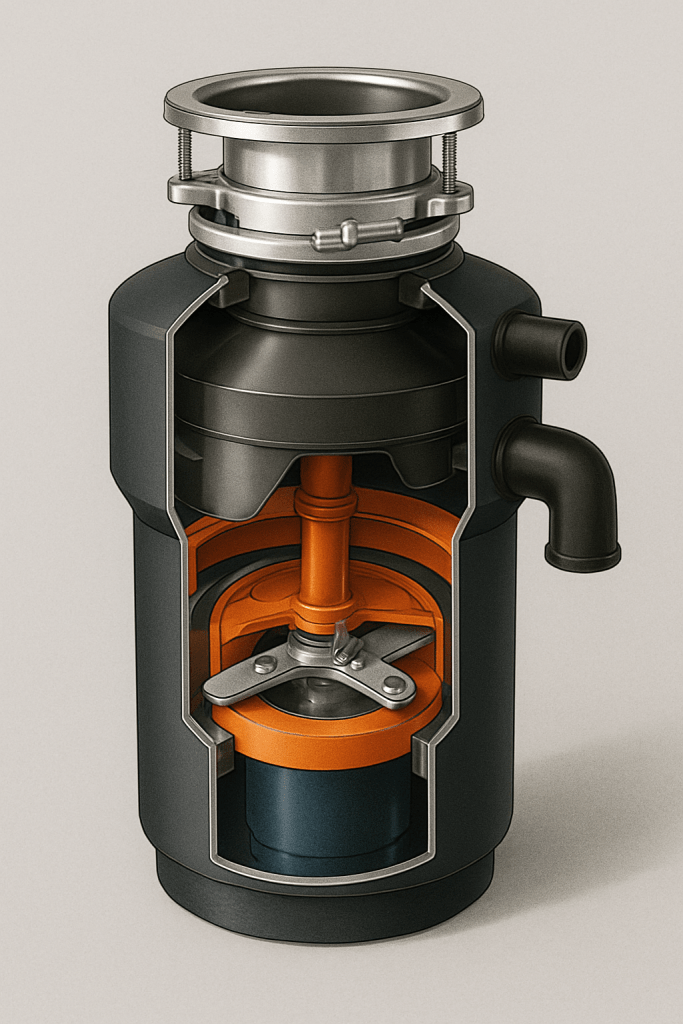
The Disposer Hums but Doesn’t Spin
Typical Causes
- A jammed impeller (the internal grinding plate can’t rotate)
- Foreign objects in the chamber (bones, utensils, hard items)
- Overloading the disposer with too much food at once
Try the Following:
- Turn off the power at the switch and unplug the disposer or turn off the circuit breaker.
- Insert the manufacturer’s hex key (if equipped) into the bottom of the disposer and gently rotate it back and forth. This can free a stuck plate.
- From above, use a wooden spoon handle to gently move the impeller plate – never put your hands or fingers inside the disposer
When To Reach Out for Help:
- The disposer remains jammed despite the hex-key method.
- You hear grinding metal or suspect a non-food object lodged inside.
- The unit trips the breaker repeatedly after clearing the jam.
The Disposer Won’t Turn On at All
Typical Causes
- Tripped internal reset button
- Tripped breaker in the electrical panel
- Failed wall switch or loose electrical connection
- Motor failure
Try the Following:
- Press the red reset button on the bottom of the disposer.
- Check the breaker panel and reset the circuit if needed.
- Confirm the wall switch actually controls the outlet or hardwired feed.
When To Reach Out for Help:
- The disposer still will not power up after resetting.
- The breaker trips immediately when you try again.
- There is any smell of burning electrical components.
- Electrical issues inside disposers can escalate quickly—this is where a plumber or qualified technician should take over.
Slow Draining or Standing Water in the Sink
Typical Causes
- Food buildup in the drain line or trap
- Grease solidifying in the pipes
- A foreign object obstructing the disposer outlet
- Poorly installed or improperly pitched piping
Try the Following:
- Run cold water at full pressure for 20–30 seconds while the disposer is on.
- Avoid chemical drain cleaners—they can damage components and are dangerous around a disposer.
- Use a plunger on the opposite sink bowl (if present) to help push food debris through (CAUTION: block the other drain opening with something or you may get splashed!)
When To Reach Out for Help:
- Both bowls back up at the same time.
- The drain backs up into the dishwasher.
- Water rises into the sink when the dishwasher drains.
- The trap or piping needs to be disassembled—this is where a licensed plumber is a smart move.
Bad Odors Coming From the Disposer
Typical Causes
- Food particles stuck on the splash guard or grind chamber
- Grease coating the interior
- Slow-moving water allowing debris to settle
Try the Following:
- Run cold water and turn on the disposer while feeding a small amount of ice to help knock debris off the plate.
- Clean the rubber splash guard with dish soap and a brush—this is a major source of odors.
- Add a small amount of baking soda and vinegar to the sink, let it foam, and flush with cold water.
When To Reach Out for Help:
- Odors persist despite cleaning.
- You suspect a drain line obstruction, not just disposer residue.
- The smell resembles sewage rather than food—this is a plumbing issue, not a disposer issue.
Water Leaking From the Disposer
Typical Causes
- Worn or cracked housing
- Loose mounting assembly
- Failed gasket between disposer and sink drain
- Loose discharge pipe connections
Try the Following:
- Inspect (don’t disassemble):
- Look under the sink while running water to see where the leak originates.
- Tighten the hose clamp at the dishwasher inlet if it’s visibly loose.
- Tighten the discharge elbow screws if accessible.
When To Reach Out for Help:
- The leak is from the top mount, disposer body, or bottom of the unit.
- You see corrosion or cracks in either the piping or the unit.
- Any component needs removal or replacement.
- A leaking disposer is often near the end of its service life.
Loud, Unusual, or Grinding Noises
Typical Causes
- Metal, glass, or stones accidentally dropped inside
- Worn or damaged impellers
- Loose internal components
- Misaligned dishwasher drain connection causing vibration
Try the Following:
- Turn off power and inspect with a flashlight.
Remove visible foreign objects with tongs – never put your hand or fingers into the disposer!
When To Reach Out for Help:
- Noise continues after removing debris.
- The disposer rattles violently or vibrates the sink.
- You suspect internal wear or damage.
Final Guidance for Garbage Disposers
Your garbage disposer is simple to use, but can be somewhat complex inside. Many common problems can be resolved by following the steps above. If you still need a service call though, don’t despair! Click here to schedule a visit online. We’ll do everything we can to rescue your disposer if it’s still serviceable. And if it’s not, talk to us before you purchase one on your own. Here’s why:
Some disposer brands (I won’t name them here) do an incredible job at marketing, but make an inferior garbage disposer. There are a host of reasons for our opinions, but chief among them are:
- Inferior motors, resulting in frequent jams
- Unit bodies that leak only two or three years after installation
- Cutting blades that break
If your disposer does need replacing, we can direct you to the right one for your needs, and it will be a good, strong one. Although you don’t need to buy it from us, we do offer a five-year “bumper-to-bumper” warranty on any disposer we recommend and provide.
Yours for Happy Plumbing,